What Is VAR in Football? How It Works, Rules & Decisions Explained
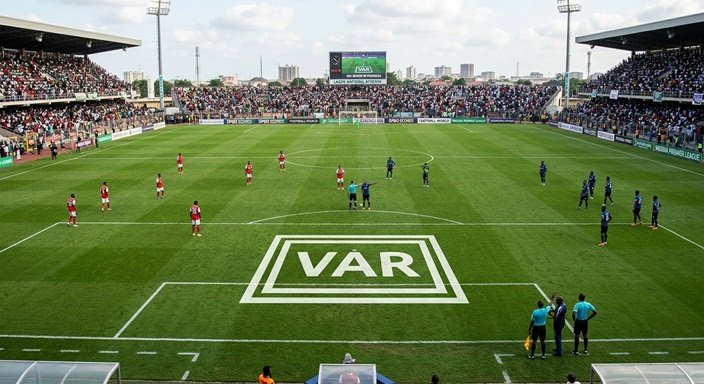
What is VAR in football? VAR stands for video assistant referee: a match official who uses video footage to help the referee correct certain major errors. The referee on the pitch still makes the final decision, not the person watching the replays.
If you’ve ever wondered why one challenge gets a pitchside review while another doesn’t, the difference is often about what VAR is allowed to review. This guide will help you follow the process, understand the signals and avoid treating every disputed decision as a VAR incident.
What you need to understand first
Start with two things: the referee’s original decision and the type of incident being checked. VAR isn’t there to referee the whole match again. It can assist only with specified match-changing decisions, generally where there is a clear and obvious error or a serious incident the officials missed.
The referee must make an initial decision. Even allowing play to continue counts as a decision that can be reviewed; the referee cannot simply leave the call to VAR. Also, remember that VAR is an official, not just a collection of cameras. That official watches from a video operation room, supported by assistant VARs and, depending on the arrangements, replay operators.
How to follow a VAR decision during a match
- Identify the original call – Notice whether the referee awarded a goal, gave a penalty, showed a card or allowed play to continue.
- Identify what is being checked – Separate a possible offside, foul, handball or mistaken identity from the incident’s outcome.
- Watch the referee’s signal – Pointing to the ear indicates an ongoing check; drawing a screen shape signals an on-field review.
- Separate facts from judgement – The location of a foul and the seriousness of a challenge involve different kinds of decisions.
- Wait for the final decision – A check or visit to the monitor does not itself overturn the original call.
Use that sequence whenever play pauses. It helps you separate three different questions: what happened, whether VAR can intervene, and what the referee finally decides.
Which decisions can VAR review?
The main review areas concern goals, penalties, red-card incidents and mistaken identity. The current IFAB protocol also includes clearly incorrect second cautions and an optional provision for incorrectly awarded corners.
Goals and offences in the build-up
VAR can check whether a goal should stand. That includes an attacking foul, handball or offside in the build-up, and whether the ball went out of play before the goal. Certain offences at penalty kicks can also be reviewed. So the final shot isn’t always the issue. A check can concern something the attacking team did before the ball reached the scorer.
Penalties given or not given
VAR can assist when a penalty was wrongly awarded or a penalty offence wasn’t penalised. It can also check whether an offence happened inside or outside the penalty area, or whether an attacking offence occurred in the build-up. Say the referee gives a free-kick outside the box, but footage establishes that the foul happened inside. That location can be corrected through information from VAR without the referee watching the monitor.
Red-card incidents and incorrect second yellows
Reviewable red-card incidents include serious foul play, violent conduct and denying an obvious goalscoring opportunity. The current IFAB protocol also includes a clearly incorrect second caution. That second-yellow provision matters. Saying that VAR can never review a second yellow is no longer an accurate general explanation of the current protocol. But this doesn’t make every ordinary yellow-card disagreement reviewable.
The wrong player receiving a card
If the referee gives a yellow or red card to the wrong player from the offending team, VAR can help correct the identity. That doesn’t automatically open up the underlying offence for review: it must independently fall within another reviewable category.
Incorrectly awarded corners
The IFAB protocol allows competitions to use VAR for a clearly incorrectly awarded corner, but only when the decision can be changed immediately without delaying the restart. It’s a competition option, not a blanket instruction to review every disputed corner. This is why the competition’s rules matter. A general explanation of VAR shouldn’t lead you to expect exactly the same corner-review arrangements in every match.
What’s the difference between a check and a review?
A check is the VAR team’s examination of a potentially reviewable incident. These checks happen automatically, and some are completed without stopping the match or attracting much attention.
A review is the formal reconsideration of a decision. Only the referee can initiate it, although VAR can recommend one. The final decision can come from information communicated by VAR or from the referee watching footage at the pitchside monitor. Therefore, no trip to the screen doesn’t mean there was no check. Also. players don’t need to demand one, the officials already requires automatic checks of relevant situations.
Why does the referee sometimes use the monitor?
Factual information can usually be passed directly to the referee. For subjective decisions, such as whether a challenge deserves a red card, VAR can recommend an on-field review so the referee can assess the footage.
During that review, the referee draws a screen shape and watches replays in the designated review area beside the pitch. Afterwards, the referee gives the screen signal again and communicates the decision. But going to the monitor isn’t an automatic admission of error. The referee retains the final say and can keep the original decision.
What does “clear and obvious” actually mean?
It means VAR shouldn’t intervene merely because another decision would also have been reasonable. For a subjective call, the footage must clearly establish an error; a genuinely debatable decision should remain with the referee’s original judgement.
That’s the distinction behind many arguments about VAR. You might disagree with a penalty decision without the footage showing the clear error needed to change it.
In our view, the most useful question isn’t simply, “Would I have given that?” Ask, ‘Does the replay clearly show why the referee’s decision was wrong?’ That keeps the discussion closer to the intervention threshold.
Why slow motion doesn’t answer everything
Slow motion helps establish the point of contact in physical challenges and handball incidents. Full-speed footage is used to assess the intensity of an offence or whether a handball occurred.
So a close-up of contact is only part of the picture. When discussing a tackle, consider the full-speed replay too, rather than judging its intensity from a frozen image alone.
Why checks can take time
There is no fixed time limit for a VAR review under the IFAB protocol. Accuracy takes priority over speed.
A longer check also doesn’t guarantee that the decision will change. The original call stands unless the review establishes the required error, and the referee remains responsible for the outcome.
Next time a check starts, identify the original call before arguing about the replay. Then watch whether the question is about a fact, such as location, or a judgement, such as the seriousness of contact. You’ll have a clearer idea of what the officials are deciding -and why the referee may never need to approach the screen.

Bernard Bassey
Bernard Bassey runs SPBO Scores from Abuja and writes about football rules, records and Nigerian football.



2 comments