10 Biggest Football Stadiums in the World by Capacity
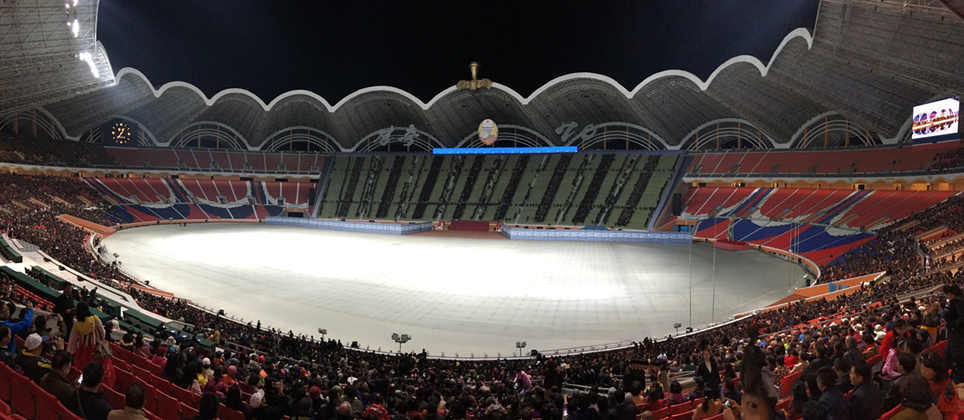
The biggest football stadiums in the world aren’t all football-only grounds. This ranking covers venues that host association football, ordered by stated total capacity rather than record attendance, with North Korea’s Rungrado 1st of May Stadium first. It includes grounds mainly used for other sports, but excludes unfinished expansion targets.
The top 10 at a glance
Rungrado’s official figure is disputed, while Melbourne’s total includes standing places; both differences are explained below. Opening years are included where available.
| Rank | Stadium | City and country | Capacity | Football team or main use | Opened |
|---|---|---|---|---|---|
| 1 | Rungrado 1st of May Stadium | Pyongyang, North Korea | 150,000 officially stated | North Korea national teams; state events | 1989 |
| 2 | Michigan Stadium | Ann Arbor, United States | 107,601 | Michigan Wolverines, American football | 1927 |
| 3 | Melbourne Cricket Ground | Melbourne, Australia | 100,024 | Cricket and Australian rules football | 1853 |
| 4 | FNB Stadium | Johannesburg, South Africa | 94,736 | South Africa; Kaizer Chiefs | 1989 |
| 5 | New Administrative Capital Stadium | New Administrative Capital, Egypt | 93,940 | Egypt | – |
| 6 | Cotton Bowl Stadium | Dallas, United States | 92,100 | Atlético Dallas; Dallas Trinity FC | – |
| 7 | Wembley Stadium | London, England | 90,000 | England | – |
| 8 | Lusail Stadium | Lusail, Qatar | 88,966 | Qatar | – |
| 9 | Estadio Azteca | Mexico City, Mexico | 87,523 | Mexico; América; Cruz Azul; Atlante | – |
| 10 | Bukit Jalil National Stadium | Kuala Lumpur, Malaysia | 87,411 | Malaysia | – |
1. Rungrado 1st of May Stadium – 150,000 officially stated
Rungrado stands on Rungra Island in Pyongyang and opened on 1 May 1989. North Korea officially lists 150,000 seats, although estimates following its 2014 seating renovation put the figure at roughly 114,000. It’s a multi-purpose venue used mainly for mass performances and state events, with international football fixtures relatively rare.
2. Michigan Stadium – 107,601
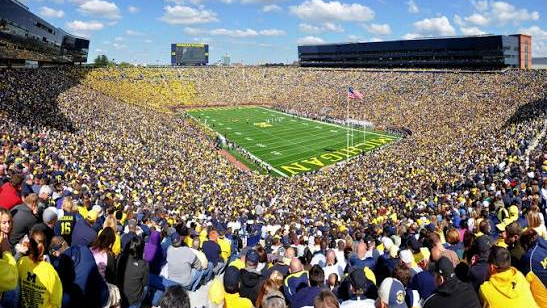
Michigan Stadium in Ann Arbor is primarily the home of the Michigan Wolverines’ American football team, rather than a regular association football ground. But its football credentials include Manchester United against Real Madrid on 2 August 2014: that match attracted 109,318 spectators, the largest football crowd recorded in the United States. That attendance was higher than the stadium’s stated capacity, so the two figures shouldn’t be confused.
3. Melbourne Cricket Ground – 100,024
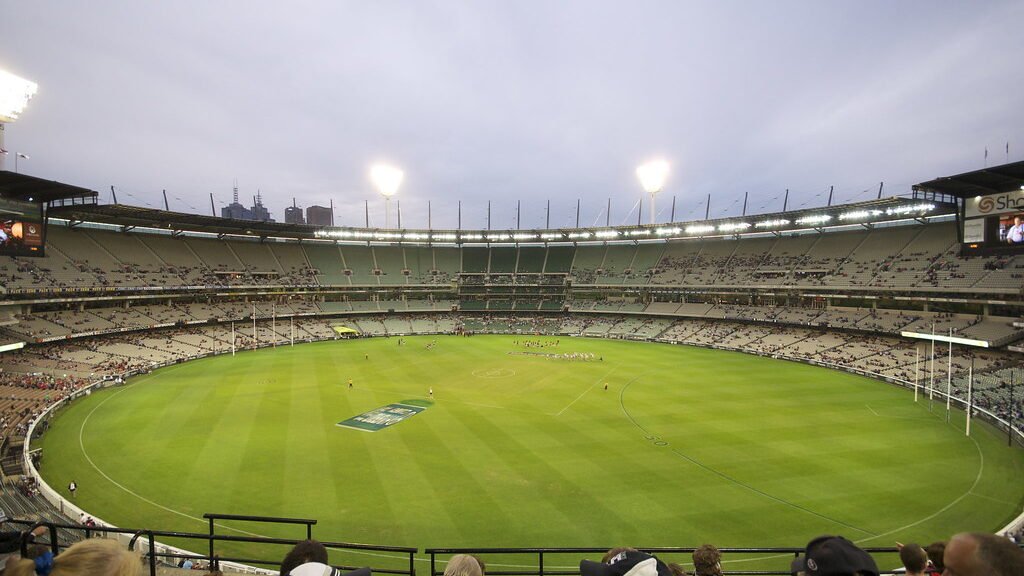
Melbourne’s MCG is another multi-purpose inclusion, mainly used for cricket and Australian rules football; its capacity includes approximately 5,000 standing places. It has hosted association football at the 1956 Olympics and Australia’s national team for major matches, including World Cup qualifiers. So, if you expected a list made entirely of club football grounds, this is why the definition matters.
4. FNB Stadium – 94,736

Johannesburg’s FNB Stadium, also called Soccer City, is used by South Africa’s national team and Kaizer Chiefs. It opened in 1989 and was expanded ahead of the 2010 World Cup.For many fans, its defining football moment remains that tournament’s final: Andrés Iniesta scored in the 116th minute as Spain beat the Netherlands 1–0.
5. New Administrative Capital Stadium – 93,940
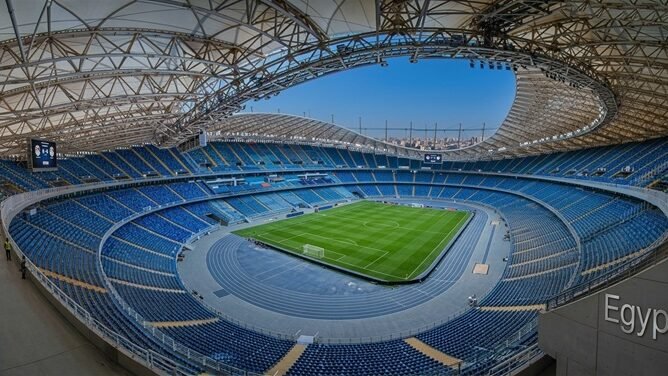
Egypt’s New Administrative Capital Stadium is listed at 93,940, with the Egypt national team named as its home side. That puts it just below FNB Stadium and makes it Egypt’s largest football stadium in this ranking. Egypt therefore has a venue ahead of Wembley on capacity, even if Wembley is the more familiar name to you.
6. Cotton Bowl Stadium – 92,100
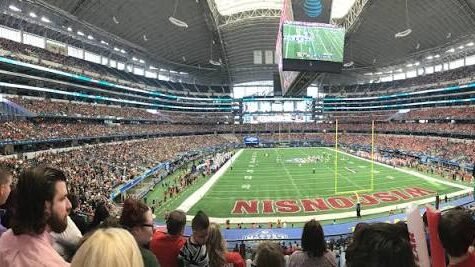
The Cotton Bowl in Dallas has a listed capacity of 92,100, with Atlético Dallas and Dallas Trinity FC named among its football teams. It gives the United States a second entry in this top 10, alongside Michigan Stadium. Neither entry needs a six-figure regular football crowd to qualify: this list measures capacity, not weekly attendance.
7. Wembley Stadium – 90,000
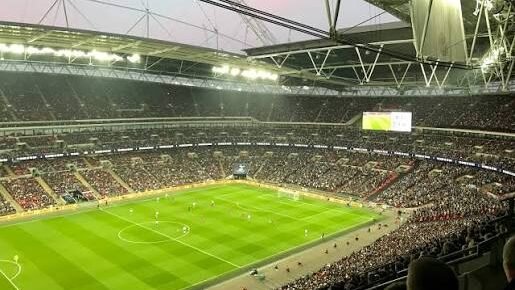
Wembley is in London, hosts England’s national team and has a listed seating capacity of 90,000. That places it below the Cotton Bowl but above Lusail in this ranking. Its round-number capacity also makes it a useful comparison: each stadium above Wembley can accommodate more than 90,000 people on its stated figure.
8. Lusail Stadium – 88,966
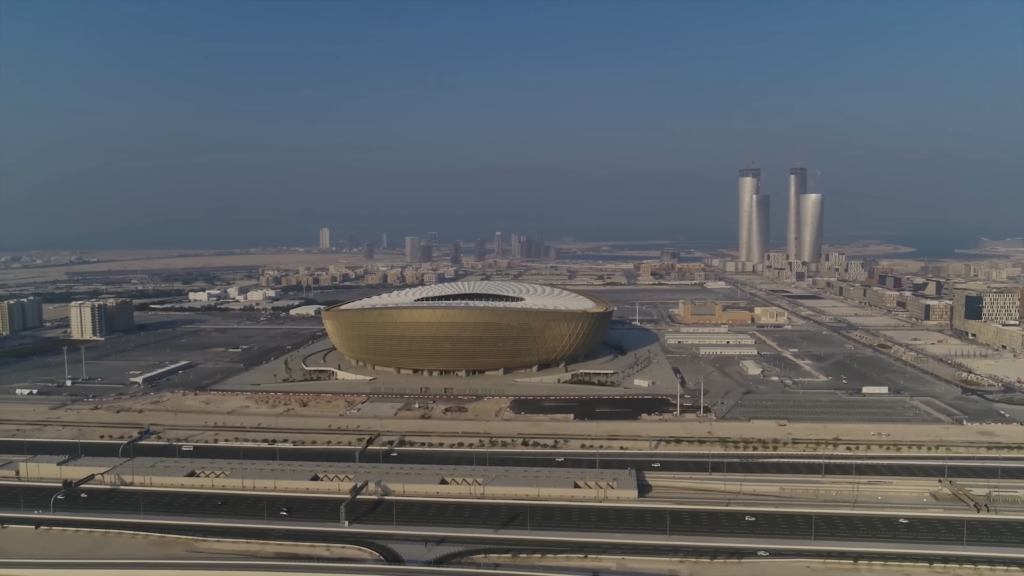
Lusail Stadium is in the Qatari city of Lusail and is listed as a home venue for Qatar’s national team. Its stated capacity is 88,966, putting it between Wembley and Estadio Azteca. It is also identified as Qatar’s largest football stadium.
9. Estadio Azteca – 87,523

Mexico City’s Estadio Azteca has a listed capacity of 87,523. Its football users include Mexico’s national team, América, Cruz Azul and Atlante. On the figures used here, it sits only slightly above Malaysia’s Bukit Jalil, showing how closely matched the final two entries are.
10. Bukit Jalil National Stadium – 87,411
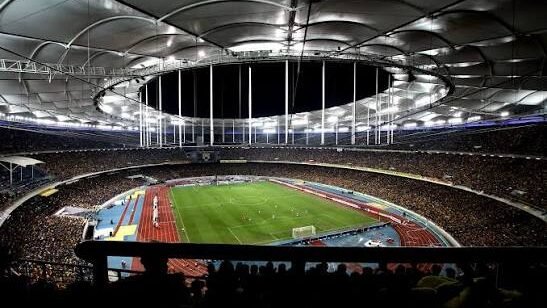
Bukit Jalil National Stadium in Kuala Lumpur completes the top 10 with 87,411 places. It hosts Malaysia’s national football team and is listed as the country’s largest football stadium. Its capacity also puts it above Egypt’s Borg El-Arab Stadium, which is listed at 86,000.
Why isn’t Camp Nou in this top 10?
Camp Nou’s familiar 99,354 figure describes its capacity before redevelopment, while 105,000 is the expansion target. Barcelona returned to a partially reopened stadium in November 2025, and the reported licensed capacity reached 62,652 in March 2026. This ranking doesn’t treat the old figure or the unfinished target as available capacity.
The biggest football stadiums in Africa
Africa’s leading venues here are FNB Stadium at 94,736 and New Administrative Capital Stadium at 93,940. Egypt also has Borg El-Arab Stadium in Alexandria at 86,000. Other major African grounds include Stade des Martyrs in Kinshasa at 80,000, Tangier Grand Stadium at 75,500 and Cairo International Stadium at 74,100.
For a football fan, the useful distinction is capacity versus crowd. Michigan’s Manchester United–Real Madrid match shows that a recorded attendance can exceed a ground’s stated capacity, while Camp Nou shows why an expansion target isn’t the same as seats available for a match.

Bernard Bassey
Bernard Bassey runs SPBO Scores from Abuja and writes about football rules, records and Nigerian football.