What is a False 9 in Football? The Role Explained
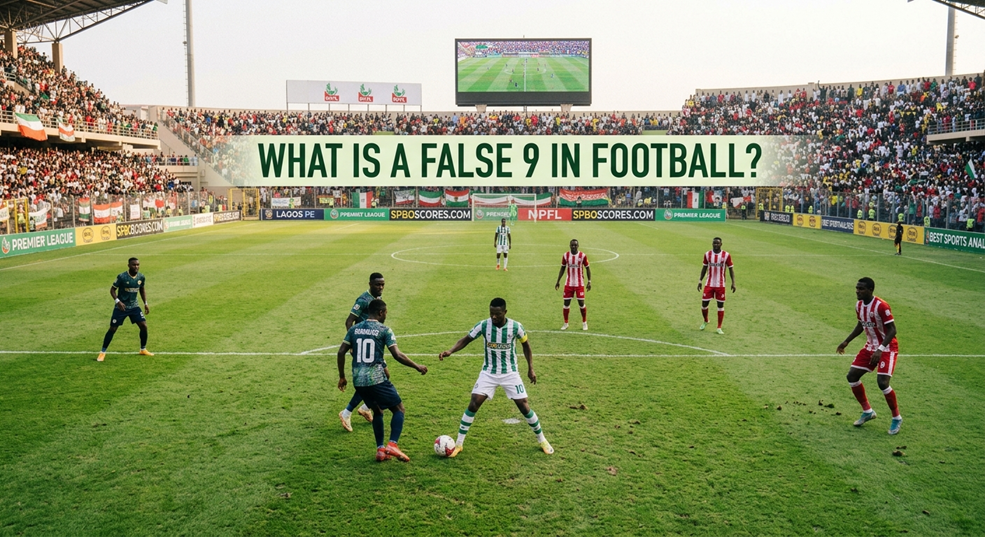
A false 9 is a centre-forward who drops deep into midfield instead of staying up front. The movement aims to pull centre-backs out of position and create space for teammates to attack.
But dropping deep is only half the job. The team needs runners to attack the space left behind, while the false 9 must still create chances and arrive in scoring positions. Lionel Messi at Barcelona and Roberto Firmino at Liverpool offer two familiar ways of understanding the role.
Why is it called a false 9?
The name comes from the traditional association between the number 9 shirt and the centre-forward position. A false 9 starts in that position but moves into areas where defenders would not normally expect the main striker. The role does not depend on the number actually printed on the shirt.
And it is not a recent invention. Austria’s Matthias Sindelar played as a dropping centre-forward in the 1930s, while Hungary used Nándor Hidegkuti in a similar way in the 1950s. Much later, Pep Guardiola’s use of Messi at Barcelona helped make the role familiar to a new generation of supporters.
How is a false 9 different from a striker or number 10?
The clearest difference is the player’s starting position and what they do from there. A false 9 begins as the central forward before moving towards midfield. A number 10, or attacking playmaker, already operates behind the forward line. They can receive in similar areas, but they arrive there from different positions.
| Role | Usual position | Main attacking job |
|---|---|---|
| False 9 | Starts centrally up front, then drops deeper | Link play, draw defenders out and create space for runners. |
| Target man | Stays high against the centre-backs | Provide a central reference point and occupy defenders. |
| Poacher | Inside or close to the penalty area | Finish chances in the box. |
| Number 10 | Attacking midfield, behind the forward line | Create chances between the opposition’s midfield and defence. |
So, a striker coming short for one pass does not automatically become a false 9. The role involves repeated movement away from the front line, with teammates organised to benefit from it.
Why do teams use a false 9?
It gives centre-backs an awkward choice
Follow the forward into midfield, and a centre-back can leave a gap behind. Stay in the defensive line, and the false 9 may receive the ball with room to turn. That decision is the main problem the tactic tries to create.
Neither outcome guarantees a chance. The timing matters: the forward must move when a pass is available, and teammates must recognise when to run beyond the defence.
It adds another passing option in midfield
Dropping deeper can create a midfield overload, meaning an extra player in that area. This can give the team more passing options and help it keep possession under pressure. The false 9 therefore needs more than finishing ability. Close control, awareness, quick turns and accurate passing all matter because they may receive with opponents pressing from behind.
It opens routes to goal for other players
Wide forwards can run diagonally into the central space the striker has left. Attacking midfielders can also break forward, while full-backs provide width outside them. The team replaces a permanent central target with movement from elsewhere. Those runs still need good timing. If you want to understand when an attacker has gone too early, our explanation of the offside rule in football covers that part of the game.
Which players show how the role works?
Lionel Messi under Pep Guardiola
Guardiola used Messi as a false 9 at Barcelona from around 2009. Starting centrally, Messi could drop between midfield and defence, receive the ball and turn towards goal.
If a centre-back followed him, Messi could escape pressure and pass into the space for a wide forward. If nobody followed, he could turn and dribble towards the defence himself. His ability to threaten in both situations made the movement especially difficult to handle.
Roberto Firmino under Jürgen Klopp
At Liverpool, Firmino dropped towards midfield to link play and create space for Mohamed Salah and Sadio Mané to attack. His aggressive pressing was another important part of Klopp’s approach. This shows why you should watch the players around the false 9, not just the player receiving the ball. Firmino’s deeper movement and his teammates’ forward runs were connected parts of the attack.
Cesc Fàbregas with Spain
Vicente del Bosque used Fàbregas as a false 9 in Spain’s Euro 2012-winning team. His ability to receive under pressure and find passes helped Spain create extra numbers in central areas. Fàbregas shows a different emphasis from Messi: a midfielder’s passing and positioning could help the team control possession from the centre-forward role.
What can go wrong with a false 9?
The biggest danger is an empty attack. If the forward drops but nobody runs beyond, the team gains another midfielder while losing its central striker. Possession alone does not replace a threat behind the defence.
There is also a trade-off inside the penalty area. With the central forward coming short, the team can lack a focal point for crosses unless another attacker arrives. The false 9 must also make late runs back into the box rather than remain deep throughout the move.
And the role needs a particular mix of skills. A player must protect the ball under pressure, spot passes, judge when to drop and still finish chances. Simply putting a midfielder up front does not solve those demands.
How can you spot a false 9 during a match?
Watch the central forward when their team builds an attack. Do they repeatedly leave the centre-backs and move towards the ball? Then look beyond them: are the wide forwards or midfielders running into the space they have left? Those connected movements are stronger clues than one isolated touch in midfield.
Also watch what happens after the pass. A false 9 may turn, release a runner and then arrive late in the box. Without the ball, they can perform familiar striker duties, including pressing centre-backs and blocking passes into midfield.
Is it only for possession-heavy teams?
No. Although the role can help a team control midfield, a false 9 can also link play during counter-attacks. The movement is useful beyond long spells of possession.
In our view, a Nigerian or other African team should judge the role by its players, not by how fashionable the tactic looks. The useful question is whether it has someone who can receive under pressure and teammates willing to run beyond. A false 9 needs somewhere to send the ball.

Bernard Bassey
Bernard Bassey runs SPBO Scores from Abuja and writes about football rules, records and Nigerian football.


1 comment