How to Become a Professional Footballer, Skills, Clubs and Trials

To become a professional footballer, you need to develop your skills, play competitive matches and show coaches you can perform consistently. There’s actually no single route in this journey, both club academies, grassroots teams, independent academies and trials can all form part of the journey towards a professional contract.
Meanwhile, getting noticed isn’t the same as getting signed. If you’re working towards this goal in Nigeria or elsewhere, think beyond one impressive performance. Your technical ability matters, but so do your decisions, fitness and response to coaching.
What does becoming a professional footballer involve?
The move into professional football includes earning a professional contract, which sets out terms such as salary, duration and bonuses. Joining an academy is a development opportunity, not a guarantee that you’ll receive that contract.
As much as that distinction matters, a football academy gives you somewhere to improve; however, you still have to demonstrate that you’re ready to progress towards senior football.
Also, your most useful goal or objective isn’t simply to get discovered. It’s to become a player who can contribute reliably to a competitive team. That gives your training a clearer purpose.
Build the skills you can use under pressure
Start with ball control, first touch, passing, dribbling and shooting. These are foundational skills, and coaches look for players who can use them under pressure rather than only in comfortable practice sessions.
Your first touch is how you control the ball when it reaches you. A good one prepares your next action, whether that’s a pass, a dribble or a shot.
You should make your practice specific, rather than spending every session doing a little of everything, choose an area to work on and ask your coach for feedback. Breaking skills into manageable tasks is part of the development approach.
Skills you should master
- Receiving the ball: Practise controlling the ball so you’re ready for your next action.
- Passing the ball: Work on both short and longer passes, not just the distance you find comfortable.
- Shooting the ball: Practise accuracy and power with both feet.
- Dribbling with the ball: Leep control while changing direction and moving around opponents.
- Defending the ball: Develop this even if you play further forward; winning possession is a team responsibility.
Don’t make tricks the whole session, you should know that ball control is useful, but it needs to support passing, shooting and team play, all these will make you a perfect player.
Learn what to do without the ball
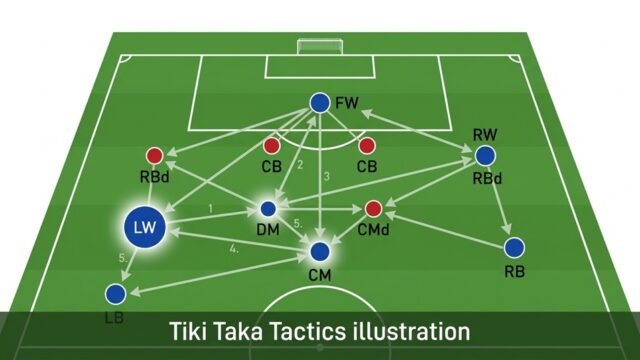
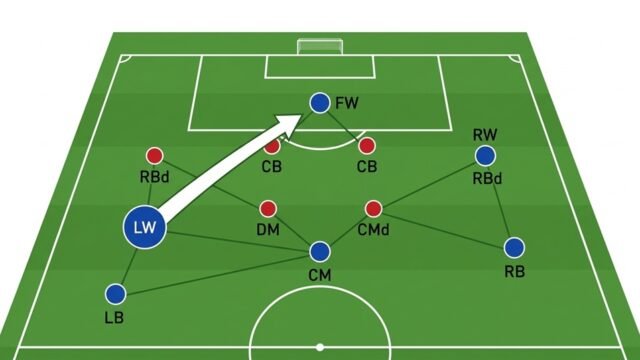
Technical ability is only part of the job, while tactical awareness means understanding positioning, movement, formations and the decisions that help your team.
You can develop that understanding by studying professional matches and applying what you notice in training. Communication and awareness of your team-mates also belong in your development, not as extras after the ball work.
When watching a match, try following the player in your position instead of following only the ball. Ask yourself: where do they move when a team-mate has possession? How does their position change when the opposition attacks?
Then discuss those observations with your coach. The aim isn’t to copy every movement you see. It’s to understand the choices available in your own team.
Join a team that gives you coaching and matches
A competitive club can provide structured training, experienced coaching and regular opportunities to play. Players can progress from local or amateur football towards higher levels, although there’s no single route through the game.
That means you don’t have to treat an overseas academy as your only starting point. Grassroots football, independent academies, competitive leagues and club academies are all recognised development routes.
When choosing an environment, focus on what it offers your development:
- Structured sessions rather than unplanned practice.
- Coaches who identify weaknesses and give useful feedback.
- Competitive matches where you can apply what you’ve learnt.
- Opportunities to improve communication and team understanding.
In my view, regular coaching and meaningful match experience are more useful priorities than choosing somewhere only because its name sounds impressive.
Train your body, but make room for recovery
Football combines short bursts of intense activity with endurance. Your preparation therefore needs more than running alone: strength, agility and flexibility also matter.
Strength work includes the whole body, not just the legs. Core strength supports balance and stability, while agility helps you change direction quickly and retain control. Also, recovery deserves attention too. Injury prevention and rehabilitation are part of maintaining the fitness needed for football.
Build your routine with your coach rather than borrowing a demanding schedule simply because a professional uses it. A useful training discussion should cover your ball work, physical preparation, matches and recovery, not just how much extra exercise you can fit in.
What do scouts and coaches look for at trials?
Trials give players an opportunity to demonstrate their ability to a team or academy. Scouts also assess players at matches and tournaments, so a trial isn’t the only place you can be noticed.
According to FCV International Football Academy, qualities assessed at trials include consistency, work rate and coachability, the ability to take feedback and adjust. Composure under pressure also matters.
So, don’t approach a trial as a competition to produce the most spectacular moment. Our advice is to concentrate on showing the football you can repeat, make purposeful decisions, contribute to the team and respond when a coach asks you to change something.
Prepare across the technical, tactical and physical sides of your game. And understand what the trial expects before you attend, rather than assuming every assessment will be the same.
An academy place is progress, not the finish line
Academies can offer structured coaching, competitive matches and individual feedback. But players still need to prove themselves as they work towards professional contracts and senior football.
A real example is Milai Perott, whom FCV International Football Academy identifies as a player it supported before he signed a professional contract with Notts County. That shows one possible pathway, not a result every academy player will achieve.
Keep that distinction in mind when setting goals. Writing from experience, it’s sensible to measure progress through stronger performances, useful feedback and increasing readiness for a higher level, not simply through admission to a programme.
Keep education and family support in the picture
Football development involves learning as well as playing, including understanding the game’s rules and strategies. Coaches, mentors, friends and family can also provide support through difficult periods.
There are practical demands too. Equipment, travel expenses and training fees can place demands on a player’s family.
Talk about those commitments early, and keep education in your plans, you should combine football development with academic qualifications, while making clear that an academy cannot guarantee a professional contract.
Common questions about becoming a professional footballer
Do you have to start as a child?
Starting young can give you earlier access to coaching and competitive football. But development routes differ, and early participation shouldn’t be confused with a guaranteed professional career.
If you’re starting later, a useful next move is to ask a coach to assess your current level. Build your immediate goals around that feedback rather than comparing your timeline with someone else’s.
Do you need an agent?
An agent can help find opportunities and negotiate contracts. But agents aren’t a substitute for development, competitive performances or demonstrating that you’re ready for a club.
Your contract deserves attention too: salary, length and bonuses are among the terms it can contain.
Is talent enough?
No, consistency, tactical understanding, work rate and the ability to handle setbacks also matter. Coaches assess how you perform over time, not only your best moment in one match.
What should you do next?
If you aren’t playing organised football, prioritise finding a team with structured coaching and competitive matches. If you already are, ask your coach which part of your game most needs improvement. Both coaching feedback and match experience are central to development.
Finally, ask yourself this questions, ‘What do I need to do better to be ready for the next level?’ this question gives your next training session a purpose.

Bernard Bassey
Bernard Bassey runs SPBO Scores from Abuja and writes about football rules, records and Nigerian football.