Football news: Man Utd’s Carrick crisis goes beyond Bruno’s captaincy
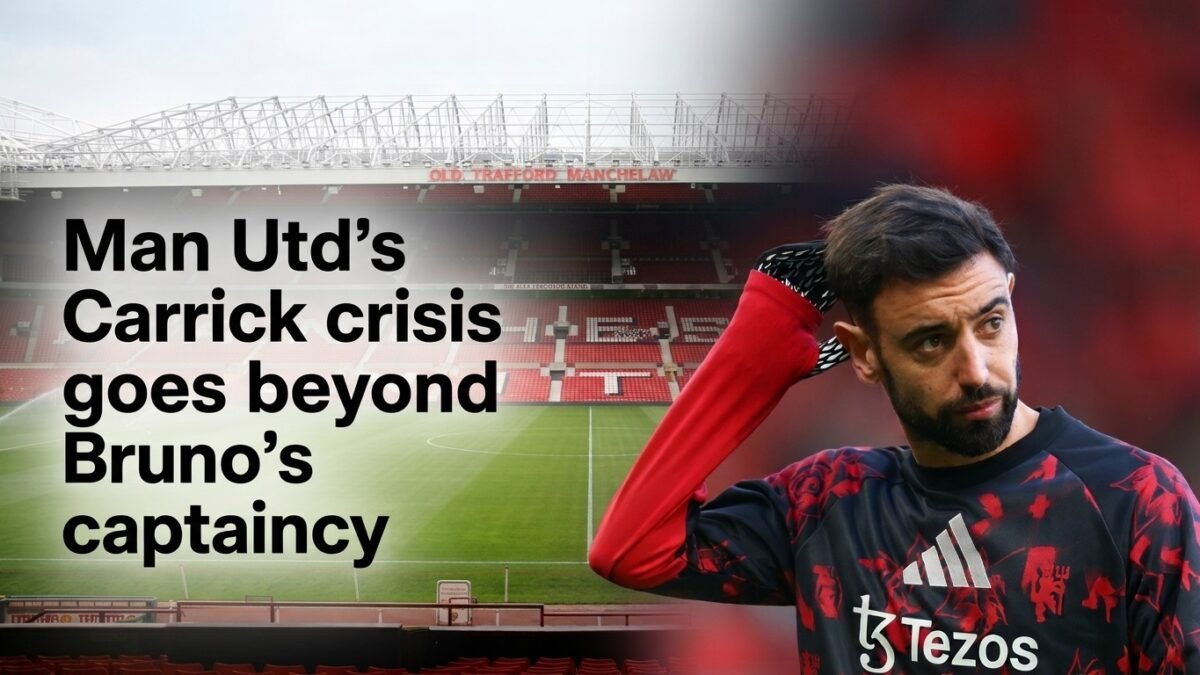
Manchester United’s 4-1 Champions League defeat at Como on 21 October brought their problems into sharp focus. Bruno Fernandes criticised the tactics, while Michael Carrick later defended his leadership and rejected suggestions of a divided dressing room. In our view, the bigger issue isn’t simply who wears the armband: it’s whether the manager and players can agree on how United should play.
What happened at Como?
United lost 4–1 away to Como after drawing 1–1 at Leeds United on 18 October. Fernandes then publicly criticised the coaching staff’s tactics, putting the relationship between captain and manager under scrutiny.
At his 23 October news conference, Carrick accepted that recent performances had fallen short. He described the Como defeat as painful and said the team had drifted away from the identity he wanted it to show.
His response went beyond formations. Carrick stressed humility, hard work and sacrifice, while making clear that neither he nor any player was bigger than the club. He also dismissed talk of a dressing-room split following comments from Fernandes and Lisandro Martinez after consecutive matches.
That distinction matters. In our view, Carrick was responding to two problems at once: the football on the pitch and the public disagreement about responsibility.
The numbers explain why the pressure grew
The Premier League table dated 24 October placed United 13th, with seven points from seven matches. Their record was one win, four draws and two defeats.
| Competition | Dated position | Record | Points |
|---|---|---|---|
| Premier League | 13th, as of 24 October | 1 win, 4 draws, 2 defeats | 7 |
| Champions League | 21st, as of 22 October | 1 win, 2 defeats | 3 |
Both records show United’s position at those dates, rather than a live league standing.
In our view, the domestic figures explain why the reaction couldn’t be reduced to one bad European night. Four draws accounted for more than half of those seven league games. United weren’t losing every week, but they were rarely winning either.
That creates a different challenge from explaining away an isolated defeat. Our reading is that Carrick needed to demonstrate progress across several matches, not merely deliver an emotional response to Como.
Keeping Bruno as captain doesn’t settle everything
Fernandes was confirmed as remaining captain after the Como defeat. But Carrick’s 23 October media appearance also left open the possibility of dropping him from the team.
Those are separate decisions. Keeping the armband answers the leadership question; it doesn’t, by itself, settle selection.
There was criticism of Fernandes’ public approach, too. United We Stand editor Andy Mitten told BBC Radio 5 Live that the captain’s comments were damaging and questioned what they could achieve. That was Mitten’s assessment, not proof that every player or supporter shared it.
Our view is that this shouldn’t become a choice between backing Bruno and backing Carrick. A player can raise a legitimate football concern while handling it poorly in public. Equally, a manager can demand unity without that demand proving his tactical approach is right.
The useful question is what changes afterwards. Does the disagreement lead to a clearer shared approach, or does it remain an argument about who deserves the blame?
A formation rumour isn’t a tactical answer
Coverage before the Bournemouth fixture included speculation about Carrick using a 4–3–3 and potentially leaving Fernandes out. That was presented as a possibility, not a confirmed team selection.
In our view, treating a formation change as the solution would miss the point. A different team sheet might signal a response, but it wouldn’t by itself demonstrate that United had resolved the disagreement exposed after Como.
The scoreline establishes how heavily United lost. It doesn’t settle every argument about why they lost. The more useful judgement is whether subsequent performances show a convincing response to the concerns raised by both manager and captain.
Why the next fixtures matter
United’s listed schedule includes Chelsea away on 31 October, Roma at home on 3 November and Aston Villa at home on 8 November.
In our view, that sequence offers a more meaningful test than another round of managerial speculation. It puts league and European performances close together, giving supporters several opportunities to judge the response rather than relying on one result.
Carrick’s message on 23 October was that he would take responsibility and restore the standards he believed had slipped. For you as a supporter, the clearest measure is whether the football begins to support those words, not whether the next press conference sounds more convincing.

Nshabum Divine
Divine Nshabum is a football news writer and contributor at SPBO Scores, where she covers the latest developments in football. Her work focuses on breaking news, transfer updates, club developments, player stories, and major football events from around the world. She is committed to delivering timely, accurate, and engaging football news that keeps readers informed about the beautiful game.