How to Stop Football Boots from Blistering Your Feet
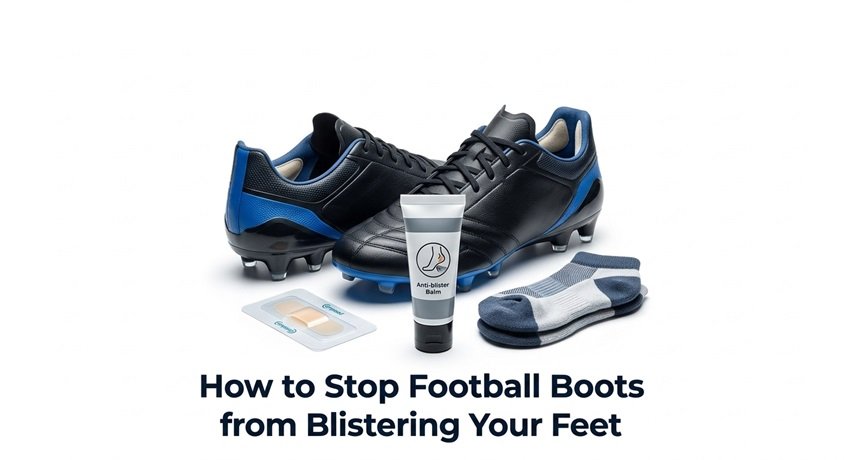
To stop football boots from blistering your feet, reduce rubbing: choose a snug but comfortable fit, wear moisture-wicking socks and break new boots in gradually. Protect areas that regularly rub with sports tape or a blister plaster before you play. These habits can reduce the friction, moisture and pressure behind blisters.
But don’t assume every blister means your boots are too small. Loose boots can let your feet slide, while tight boots can create uncomfortable pressure around your heels and the sides of your feet. The useful question is: what’s rubbing, and why?
Why do football boots cause blisters?
A friction blister forms when repeated rubbing causes layers of skin to separate and fluid collects between them. Football’s sprints and changes of direction create repeated movement inside your boots, while sweat and heat add to the problem.
Your boot isn’t the only possible culprit. Your skin can also rub against your sock, so preventing blisters means looking at the whole combination: feet, socks and boots.
That explains why simply buying another pair of boots may not solve everything. In our view, fit and moisture control deserve attention together, rather than treating either one as a complete fix.
Get the fit right before adding anything else
Your boots should hold your feet securely without squeezing them uncomfortably. Look for a supported heel, enough room for your toes and no obvious sliding inside the boot.
Try boots on with the socks you’ll actually wear for football. Different brands and models can have different shapes and widths, so don’t rely on the size number alone.
- If your heel slips: check whether the boot is too loose or offers insufficient heel support.
- If the sides feel squeezed: the fit may be too tight for your foot shape.
- If your toes feel cramped: look for sufficient toe room rather than accepting discomfort as normal.
Lacing matters too. Tighten your laces progressively from the bottom upwards to create a supportive fit without excessive pressure. The aim is a secure foot, not the tightest knot you can manage.
Say your heel lifts whenever you accelerate. That points towards movement inside the boot, rather than something you should automatically try to solve with thicker socks.
Break new boots in before a full match
New boots can feel stiff and create pressure points before their materials adapt to your feet. Going straight into a full match puts them under sustained pressure before you’ve established whether they’re comfortable.
Start with short, relaxed sessions. Passy suggests wearing new boots for a few gentle 20-minute warm-ups, then moving towards match use once they feel flexible and comfortable.
Use those sessions to notice where rubbing starts. Early awareness of an irritated spot gives you a chance to address the fit before the discomfort becomes worse.
Breaking in and correcting a poor fit aren’t the same thing. Gradual wear can help stiff materials adapt, but boots that are too tight or too loose still present a friction problem. Don’t treat repeated pain as proof that you just need more determination.
Choose socks that manage sweat and rubbing
Socks form a barrier between your skin and your boots. Moisture-wicking options help move sweat away, while cushioning around the heel and toes can add protection where rubbing occurs.
SOLESTAR recommends moisture-wicking synthetic blends or merino wool rather than cotton, which retains sweat. Start each session with clean, dry socks and carry a spare pair for wet or humid conditions.
Do grip socks stop blisters?
Grip socks are designed to reduce movement inside the boot. Passy describes anti-slip pads, cushioning and moisture management as features that can help limit friction.
Our view is that they’re an option, not a substitute for well-fitting boots. If your boots already squeeze your feet, choosing a thicker sock without considering the fit misses the underlying problem.
Protect the spots that regularly rub
If the same part of your heel or the side of your foot repeatedly becomes sore, covering that area before football can help absorb friction. Sports tape and hydrocolloid blister plasters are options for protecting these vulnerable spots.
A hydrocolloid blister plaster is a specialist blister dressing. Passy recommends it as a protective layer over areas prone to rubbing.
Anti-friction balm or foot powder may also help reduce irritation or manage moisture before play. But think of these as additions to your routine, not reasons to ignore a slipping heel or cramped toes.
Check older boots and insoles too
Blisters aren’t only a new-boot problem. Older boots can develop pressure points or stretch, and worn insoles can lose their shape and cushioning.
Inspect your boots after demanding sessions for excessive wear or changes in shape. Those changes may identify areas that need attention. Rough internal edges or stitching can also create rubbing points.
Insoles deserve a look if your feet move inside the boots. SOLESTAR identifies foot stability and pressure distribution as factors in reducing friction, although that doesn’t establish that every player needs a replacement insole.
After football, let wet boots dry at room temperature rather than leaving them shut inside your bag. Avoid drying them on a radiator, which can damage the material.
What if you already have a blister?
Leave an intact blister closed rather than deliberately popping it. The skin covering it protects the tissue underneath from bacteria and infection.
Protection alone doesn’t address why it appeared. Before using the same boots again, consider whether the problem was heel movement, a tight area, damp socks or stiffness in a new pair.
The most useful change is the one that tackles that specific cause. Another plaster may protect the spot, but a heel that keeps sliding still needs a better fit.

Bernard Bassey
Bernard Bassey runs SPBO Scores from Abuja and writes about football rules, records and Nigerian football.